

The marginalia found in millions of Arabic manuscripts could reshape our understanding of Islamic history
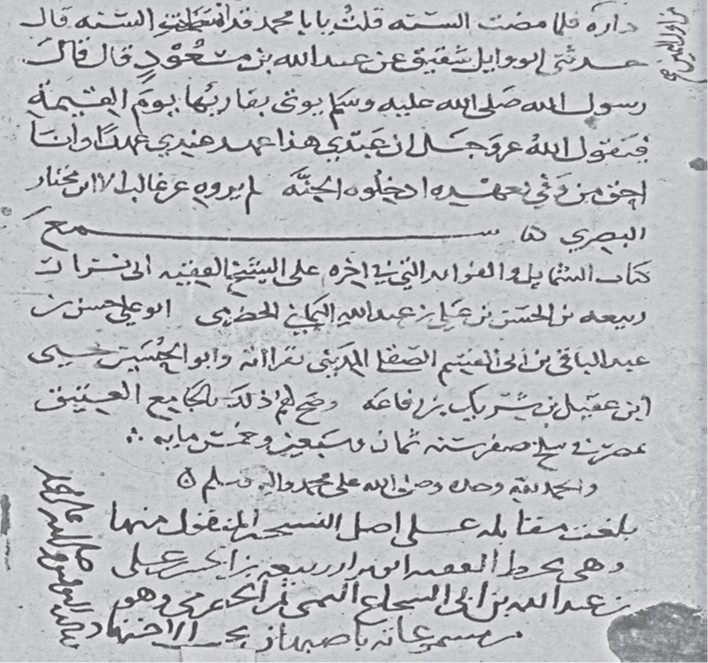
The final page of Süleymaniye Library manuscript MS 254, Türkiye. For modern codicologists and historians, samāʿāt can be even more valuable than ownership notes, as they document who studied a text, when and under whom it was studied, whether the reading
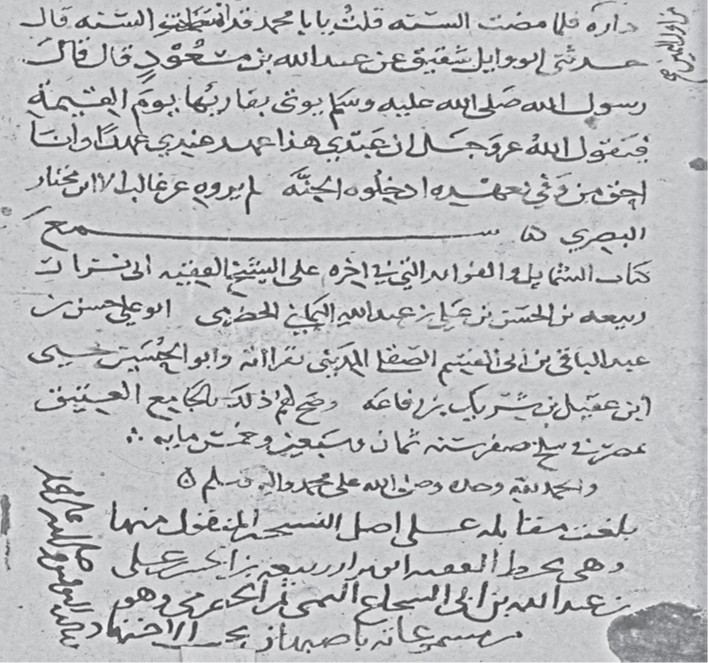
Gotha MS orient. A 627 (Iʿtilāl al-Qulūb). A typical samāʿ note records the title of the work, the teacher’s name, and the names of those who attended the oral reading of the manuscript. It also documents the date and location of the session and indicates
Samāʿāt, Arabic for marginal notes, are crucial for establishing the authenticity of millions of Arabic manuscripts held in libraries the world over.
SHARJAH, EMIRATE OF SHARJAH, UNITED ARAB EMIRATES, November 3, 2026 /EINPresswire.com/ -- For a comprehensive understanding of the content of millions of Arabic manuscripts held in libraries around the world, it is crucial for scholars to first examine what their marginalia reveal, according to a new study published in the Journal of Islamic Thought and Civilization.
Called Samāʿāt (Arabic for “hearing” or “audition”), the marginal notes are among the most fascinating features of Arabic manuscript culture. Without them, the authenticity of the documents would be in doubt. They provide evidence of who authorized the text following a review session during which the document was read aloud before scholars, while students attended and heard the reading.
The study, conducted by researchers from the University of Sharjah, reveals that some manuscripts accumulated dozens, and occasionally hundreds, of samāʿāt over successive generations, preserving a remarkable record of how books were read, taught, authenticated, and transmitted across the Islamic world.
“The findings show that audition records can fill gaps in existing historical sources and reveal individuals whose names are not documented elsewhere,” said Dr. Saleh Muhammad Zeki Mahmood Al-Leheabi, Associate Professor of Islamic History and Civilization and the study’s lead author.
Dr. Al-Leheabi translates Samāʿāt as certificates of audition, describing them as vital records and “independent sources for reconstructing Islamic intellectual history” that remain largely unexplored.
Codicologists specializing in Islamic manuscripts typically pay paramount attention to the marginal notes found in ancient Arabic writings because of their crucial significance for the authenticity and value of content. In many cases, the margins themselves may prove to be as valuable as the manuscript’s main text.
The authors highlight four key findings. They emphasize the role of samāʿāt in providing
detailed and valuable historical information, and they note that the volume of marginal notes preserved in Arabic manuscripts is immense, necessitating systematic study and classification.
According to Dr. Al-Leheabi, once systematically researched, the margins of Arabic manuscripts could help reconstruct the contents from lost or unidentified works.
“Their references to people, places, and dates offer insights into scholarly and cultural life across different periods,” he explained. “Organizing these records into structured databases and catalogues would make their information more accessible to researchers.”
Untapped historical wealth
The authors base their findings on a corpus of 47 manuscripts from which they extracted 132 different marginal notes. They were selected by careful examination of published catalogues by Leder and Seidensticker, as well as digital and physical collections.
The manuscripts date back to different centuries, ranging from the 6th century to the 15th century. They originated from major metropolitan centers of Islamic civilization such as Baghdad, Fustat, Damascus, Aleppo, and Isfahan. The documents tackled a variety of topics, including hadith (Prophet Muhammed’s sayings), arts, Quranic sciences, and religion.
“They were picked on the spot to show differences in types of certificates (full, partial, and broken), time periods (6th–9th/12th–15th centuries), and places (Egypt, Iraq, and Syria),” the authors write.
The authors’ analysis explores how the samāʿāt could be extracted from manuscripts and used as historical sources. They adopt a historical approach based on source material studies and the analysis of selected manuscripts.
“The widespread presence of audition records in manuscripts highlights their importance as historical sources and their fundamental role in manuscript production and the transmission of knowledge,” said Dr. Al-Leheabi. “Manuscripts should not be viewed merely as texts to be edited but as repositories of unique historical information that can enrich our understanding of the past.”
The main idea of the study is that samāʿāt are independent, well-documented sources whose study and examination have the potential to change the way we think about the intellectual and social past of Islam. The authors reiterate that samāʿāt are not merely notes written in the margins or flyleaves of Arabic manuscripts, nor are they simply colophons added by their scribes. The samāʿāt are as crucial as the manuscript subject matter itself, the authors say.
Medieval peer review
For academics and graduate students wading through the article, the process by which samāʿāt were compiled might draw some tentative analogy with modern blind peer review, as both serve to establish trust in knowledge, although they set very different epistemological assumptions.
Like a peer review, a marginal note, or samāʿ (singular of samāʿāt,) is a certification that the scholars and students have listened to a reading of the document and attest to the authenticity of the scholarship. And like a peer review, a manuscript bearing a samāʿ gave readers a reason to trust the knowledge contained in it. The main difference is the anonymity of peers reviewing academic knowledge today.
The study’s main thrust is to illustrate that samāʿāt are independent, well-documented sources whose examination may change the way we think about the intellectual and social past of Islam. They draw four main conclusions. They find that samāʿāt are not written haphazardly but follow standardized certification formulas that “include full (kāmil), partial (juzʾī), and fragmentary/collation remarks with their own equations (formulas),” allowing researchers to determine the extent of transmission.
The second important finding concerns the inclusiveness reflected in these marginal notes. The marginalia, according to the study, indicate broad participation in scholarly activities. “Audition records often include women …, traders …, and craftspeople with wealthy jurists. They challenge restricted notions of Islamic education by recovering [evidence preserved in] samāʿāt,” the authors write.
The third finding suggests that modern national borders did not constrain scholarly mobility in the medieval Islamic world. The authors note, “According to the certificates, students were able to travel within Baghdad, Fustat, Damascus, Jerusalem, and Isfahan, all of which are part of different political groups.”
The authors’ fourth major conclusion addresses collation notes, which provide evidence of “the authentication of the material; they provide a supplemental textual verification next to oral audition. Scribal corrections, erasures, and cross-references demonstrate meticulous self-correction.”
Challenges in studying samāʿāt
Dr. Al-Leheabi believes the findings can be translated into numerous practical implications. He mentioned that samāʿāt are a useful tool for manuscript authentication, cataloguing and archiving, historical biography, manuscript editing, and the study of scholarly relationships and document encounters between historical figures.
“Audition records provide valuable evidence of how knowledge was transmitted, who participated in scholarly gatherings, and how books circulated across the Islamic world,” he said. “A close examination of audition records can reveal individuals absent from other historical sources and help fill important gaps in our understanding of Islamic history.”
Nonetheless, the authors highlight that, despite their findings, there are still challenges facing codicologists studying samāʿāt and the codicology of Arabic manuscripts more broadly.
“Countless manuscripts are not published, uncatalogued, or dispersed across collections. Sometimes, certificates contain fading text, overwriting, or hard-to-read handwriting,” they note. “The lack of digital collections makes it harder to build and use databases. Methods of recording samāʿāt vary from thorough to inadequate and confusing. Interpretation requires cross-referencing with biographical dictionaries, chronicles, or other such sources, which may result in incorrect attributions.”
Original Source URL: https://doi.org/10.32350/jitc.162.02
LEON BARKHO
University Of Sharjah
+971 50 165 4376
Legal Disclaimer:
EIN Presswire provides this news content "as is" without warranty of any kind. We do not accept any responsibility or liability for the accuracy, content, images, videos, licenses, completeness, legality, or reliability of the information contained in this article. If you have any complaints or copyright issues related to this article, kindly contact the author above.
